
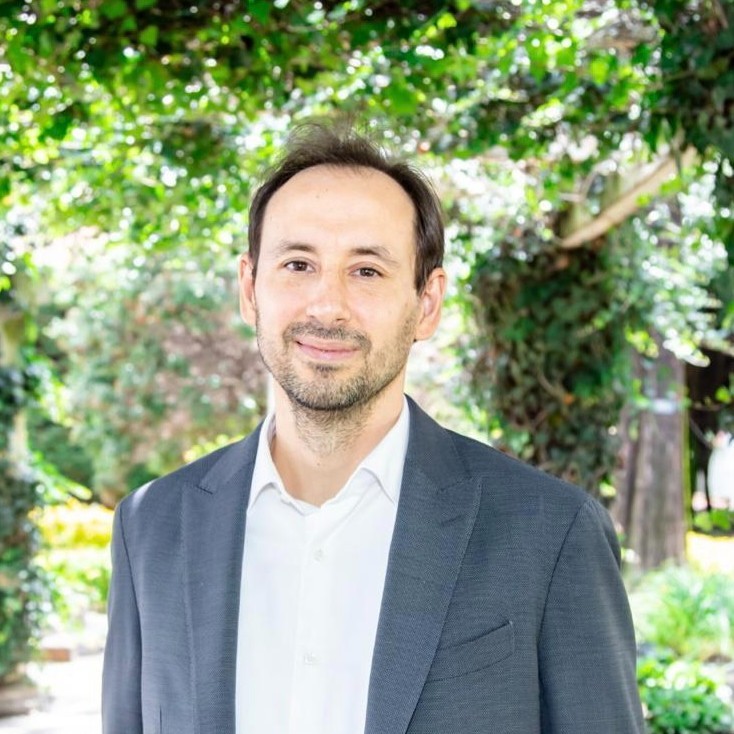
John Realpe-Gómez
Sr. Quantum Scientist
1. Passionate about potential synergy between physics, biology and artificial intelligence. - At LRC: Using tools from complex systems and modern cognitive science to investigate biological complexity, life as information and how scientists do science to better understand artificial and biological intelligence. - At NASA: First successful training of quantum annealing computer (D-Wave 2X) to generate real and synthetic data-sets. Co-developed quantum-classical deep architecture for data-sets of higher resolution than currently possible with quantum hardware. - At University of Manchester: Integrated statistical physics and agent-based modelling to study learning in strategic games and resilience in semi-arid ecosystems. - At Microsoft Research of Polytechnic University of Turin: Adapted spin glass techniques to develop message-passing algorithms in auction and game theory. 2. Interested in how first-person methods, e.g. mindfulness meditation, may complement traditional third-person methods in science. 3. Also passionate about enhancing education access/mobility in poverty-stricken regions. Grown up in a slum and deeply indebted with UNESCO's ICTP founded by Nobel laureate Abdus Salam, and the generosity of other people and institutions. - Joined University of Cartagena in a region of Colombia with the worst economic inequality to contribute and complement extensive first-person experience on poverty dynamics. Co-developed model to explain experiments on human cooperation and identified criticality as potential adaptability feature in human groups. In 2014 started adapting to local context Prof. Mike Schatz's (Georgia Tech) brilliant Coursera “Introductory Physics I with Lab" with Mike and volunteers, but departed before completion to work at NASA. 4. Love simplicity/minimalism.
zapataquantum.com
nasa.gov
San Francisco, California, United States